 Skip to content
Bathroom Tiles and Materials by Budget for Sydney Renovations

Bathroom Tiles and Materials by Budget for Sydney Renovations
Choosing bathroom tiles Sydney homeowners can live with for years is about more than colour. Tiles, grout, waterproofing, ventilation, lighting, fixtures and storage all affect how the room looks, cleans and lasts.
For owner-occupiers, the right material choices can make a small bathroom feel brighter and easier to use. For investors, the focus may be on durable finishes, simple cleaning and fewer maintenance calls between tenancies.
This guide explains how to choose bathroom renovation materials by budget, where to save, and where to spend more for long-term performance.
Key Takeaways
- Bathroom tiles Sydney selections should match the budget, cleaning routine, property type and moisture control.
- Large format tiles can reduce grout lines, but they may need better wall and floor preparation.
- Mid-range finishes often give the best mix of visual appeal, durability and cost control.
- Waterproofing, ventilation and lighting are areas where cheaper choices can lead to long-term issues.
- Investors often benefit from simple, neutral finishes that are easy to replace and maintain.
- A fixed, itemised quote should show what is included, not just a loose starting price.
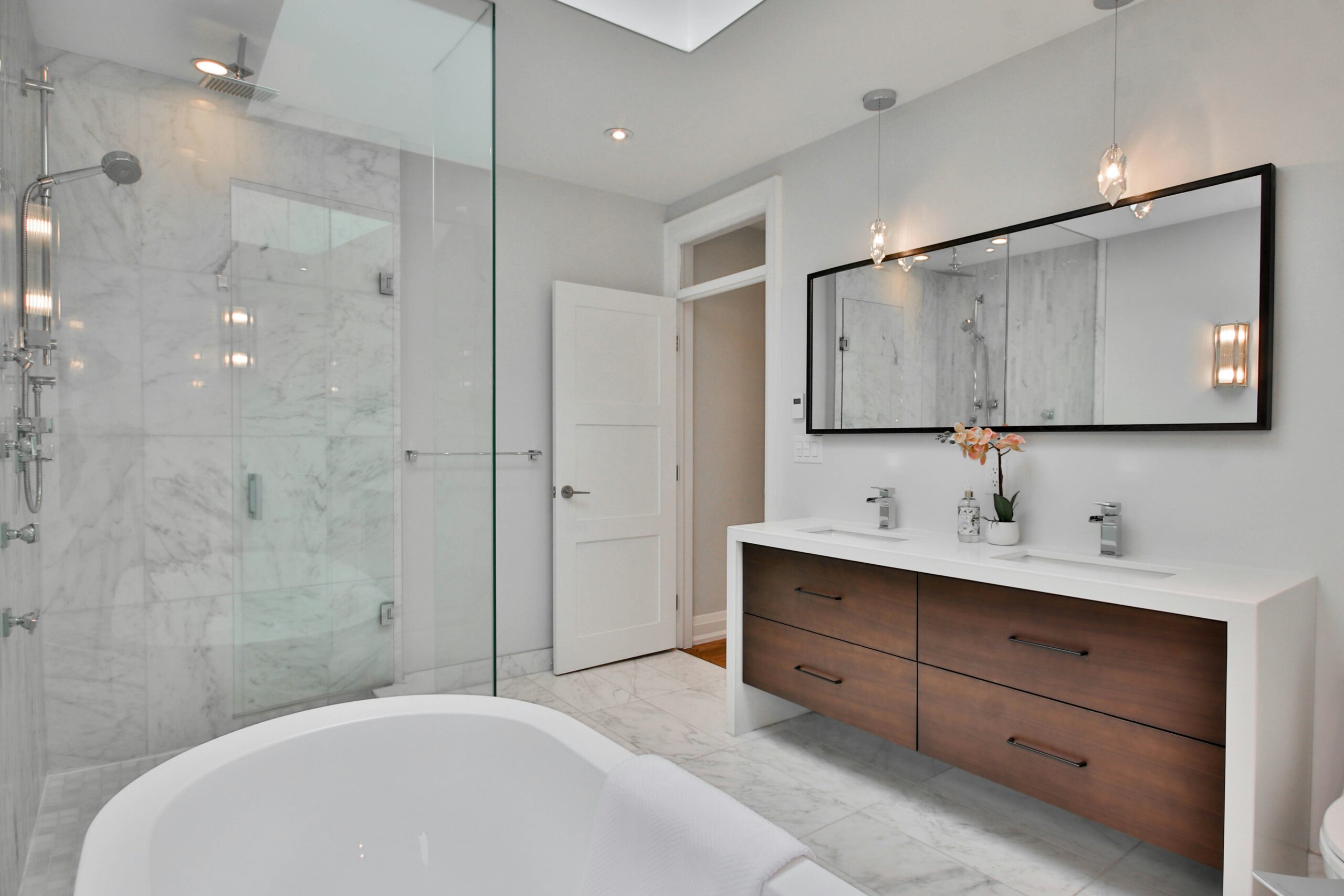
How Tiles and Materials Influence Bathroom Cost and Durability
Tiles Are Part of a Larger Wet-Area System
Tiles set the visual tone of a bathroom, but they are part of a larger wet-area system. The surface you see sits over substrate preparation, waterproofing, adhesive, grout, silicone, falls and drainage.
These choices should sit inside a clear bathroom design plan, so the tile layout, storage, lighting, ventilation and waterproofing details are considered before work starts.
In NSW, kitchen, bathroom and laundry renovation work requires the right licence or certificate. This matters for Sydney bathrooms, where waterproofing, plumbing, electrical work and tiling must be planned together.
Common Bathroom Trade Terms
A few trade terms are worth knowing:
| Term | Meaning | Why It Matters |
|---|---|---|
|
Membrane |
A waterproof layer beneath tiles |
Helps stop water moving into walls and floors |
|
Set-down |
A lower floor area, often used in showers |
Helps manage water and floor levels |
|
Fall to waste |
The slope that sends water to the drain |
Reduces pooling and water sitting on tiles |
|
Substrate |
The surface under the tile system |
Affects tile adhesion and waterproofing performance |
|
Grout |
The material between tiles |
Impacts cleaning, staining and moisture resistance |
What Affects Material Cost?
Material cost is affected by:
- Tile size
- Tile thickness
- Tile finish
- Tile layout
- Grout type
- Surface preparation
- Niche and ledge details
- Screen type
- Tapware and fixture range
- Lighting and exhaust upgrades
A cheaper tile can still be a good choice. A costly tile can still perform poorly if the substrate, fall, waterproofing or ventilation is poor.
Budget-Friendly Options That Still Look Clean and Modern
Keep the Design Simple
A budget-conscious bathroom does not need to look unfinished. The key is to keep the design simple and put money into areas that protect the room.
Good budget bathroom finishes often include:
- Ceramic wall tiles
- Porcelain floor tiles
- A simple vanity
- A framed or semi-frameless shower screen
- Chrome tapware
- Standard towel rails
- A plain mirror or shaving cabinet
- Neutral grout
- A basic but suitable exhaust fan
If the goal is to manage spend, it helps to understand the main drivers behind bathroom renovation cost before choosing tiles, fixtures and fittings. This can make it easier to compare quotes and see which finishes affect the final price.
Choose Tiles That Suit Daily Use
Ceramic tiles are common on walls since they are easy to clean and come in many colours. Porcelain is often used on floors since it is dense and durable. For a clean modern look, many Sydney homeowners choose light neutral wall tiles with a slightly darker floor tile.
Budget-friendly does not mean cutting corners on wet-area work. NSW Health advises that moisture control is part of reducing mould hazards in the home. Damp buildings have been linked with respiratory symptoms, asthma issues, allergic rhinitis and eczema, according to NIOSH.
Practical Choices for Rentals
For rental properties, budget choices can be practical:
- Matte or satin tiles that do not show every water mark
- Mid-grey grout rather than bright white grout on floors
- Standard tile sizes that can be replaced later
- Common tapware ranges with easy access to spare parts
- Simple wall-hung or floor-mounted vanities
Avoid fragile finishes in high-use rental bathrooms. Very textured tiles may trap grime. Highly polished floor tiles may be slippery when wet unless selected with care.
Ask for a material pack that aligns with your budget and cleaning expectations.
Mid-Range Upgrades: Niches, Feature Walls and Better Fixtures
Where Mid-Range Budgets Often Work Best
A mid range bathroom renovation often gives more room for design choices without moving into high-end custom work. For many Sydney homeowners, this is where the best value sits.
Common mid-range upgrades include:
- Recessed shower niche
- Tiled ledge
- Larger wall tiles
- Feature wall tile
- Semi-frameless shower screen
- Better vanity storage
- Shaving cabinet
- Mixer tap upgrades
- Improved exhaust fan
- Layered lighting
- Heated towel rail
Niches, Ledges and Layout Planning
A recessed niche is popular, but it must be planned early. It affects framing, waterproofing and tile layout. A niche placed in the wrong spot can add cost and create awkward cuts. A tiled ledge can be a simpler option in some rooms.
For homes with unusual layouts, older plumbing positions or tight apartment bathrooms, custom bathroom designs can help match the material choices to the space, rather than forcing a standard layout into a room that needs more planning.
Feature Walls and Small Bathrooms
Feature walls work best when used with restraint. A single feature wall behind a vanity or shower can add interest. Full feature tiling across every wall can increase cost and date faster.
For small Sydney bathrooms, mid-range upgrades should focus on function:
| Upgrade | Good For | Practical Benefit |
|---|---|---|
|
Wall-hung vanity |
Small bathrooms |
More visible floor area |
|
Shaving cabinet |
Apartments and ensuites |
Storage without extra floor space |
|
Larger wall tiles |
Modern look |
Fewer grout lines |
|
Niche or ledge |
Shower storage |
Keeps bottles off the floor |
|
Better exhaust fan |
Damp rooms |
Helps remove moisture |
|
Warm LED lighting |
Daily grooming |
Better visibility |
This type of upgrade suits owner-occupiers who want a bathroom that looks modern but still cleans easily.
When to Spend More on Waterproofing, Ventilation and Lighting
Waterproofing Should Come Before Decorative Extras
Some items are worth treating as essentials rather than optional extras. Waterproofing, ventilation and lighting sit high on that list.
Waterproofing protects the structure beneath the tiles. Wet-area waterproofing helps prevent moisture issues such as mould growth, structural damage and water movement into dry areas.
For Sydney homeowners, waterproofing should be discussed early, documented clearly and handled by qualified people. The waterproofing plan should cover floors, walls, junctions, penetrations, shower areas and any areas exposed to regular water.
Wet-Area Details Worth Paying For
Spend more where the room is exposed to water every day:
- Shower waterproofing
- Floor waste grading
- Wall and floor junctions
- Penetrations around taps and outlets
- Shower screen fixing points
- Ventilation capacity
- Lighting near mirrors
- Safe electrical layout
Ventilation and Lighting Matter Every Day
Ventilation should not be treated as an afterthought. Moisture control is part of reducing mould hazards in the home. Poor ventilation can leave towels, grout, ceilings and cabinetry damp for longer.
Lighting is another area where small upgrades can improve daily use. A single ceiling light often creates shadows at the mirror. A good bathroom plan may include:
- Ceiling lighting for general use
- Mirror lighting for shaving and makeup
- Night lighting for family homes
- Suitable task lighting near the vanity
Spend on these areas before decorative extras if the budget is tight.
Cleaning and Maintenance Considerations for Busy Households
Choose Finishes That Suit the Household
A bathroom can look great on handover and still become hard to live with if the materials do not suit the household.
For busy families, investors and shared homes, cleaning should guide the tile choice. A white bathroom with small white floor tiles and white grout may look bright at first, but it can show dirt, hair and staining faster.
Low-maintenance choices often include:
- Larger tiles with fewer grout lines
- Satin or matte finishes
- Mid-tone floor tiles
- Easy-clean screen glass
- Grout colours that match daily use
- Vanities with moisture-resistant finishes
- Wall-hung storage to reduce floor clutter
- Smooth tapware that is easy to wipe
Storage affects cleaning too. Good small bathroom storage and fixtures can keep products off the floor, reduce clutter around the vanity and make the room easier to wipe down each week.
Think About Texture, Gloss and Grout
Highly textured tiles can help with grip, but heavy texture can trap soap residue. Very glossy wall tiles can look clean and reflect light, but water marks may show more.
Tenant-friendly material choices are different from owner-occupier choices. Investors may want:
- Neutral tiles that appeal to a broad rental market
- Standard fixture ranges
- Durable vanities
- Chrome tapware
- Simple screen hardware
- Easy access for repairs
- Finishes that photograph well for listings
Owner-occupiers may prefer warmer tones, feature tiles or extra storage if they plan to stay long-term.
Plan for Care After Handover
A care guide after handover can help reduce issues. This may include advice on ventilation, glass care, grout care and silicone checks.
Ask for a material pack that aligns with your budget and cleaning expectations.
Example Material Packages for Common Budget Bands
Material Package Comparison
The packages below are examples to help with planning. A proper quote should list inclusions, exclusions, selections, site details and any access limits.
| Budget Band | Best Suited To | Common Material Choices | Where to Spend |
|---|---|---|---|
|
Value-conscious refresh |
Investors, small apartments, simple upgrades |
Ceramic wall tiles, porcelain floor tiles, standard vanity, framed screen, chrome tapware |
Waterproofing, floor fall, ventilation |
|
Practical mid-range |
Owner-occupiers, family bathrooms, ensuites |
Larger tiles, semi-frameless screen, wall-hung vanity, shaving cabinet, niche or ledge |
Storage, lighting, exhaust, tapware quality |
|
Higher-spec mid-market |
Long-term homes, main bathrooms, sale preparation |
Feature wall, larger porcelain tiles, custom-look vanity, better mirrors, premium fixtures |
Layout, waterproofing details, lighting, ventilation |
Value-Conscious Refresh
This package suits an investor or homeowner who wants a clean, functional bathroom without major design extras.
Typical inclusions may include:
- Standard tile range
- Simple tile layout
- Standard vanity
- Basic mirror
- Framed shower screen
- Chrome mixer
- Standard toilet
- Exhaust check
- Certified waterproofing
- Tidy handover
This style works well for a rental turnover or pre-sale update where the goal is to create a clean, modern space with fewer maintenance issues.
Practical Mid-Range
This suits many Sydney owner-occupiers. It gives more choice without moving too far from practical pricing.
Typical inclusions may include:
- Larger wall tiles
- Porcelain floor tiles
- Semi-frameless shower screen
- Wall-hung vanity
- Shaving cabinet
- Shower niche or ledge
- Improved lighting
- Better exhaust fan
- Quality tapware
- Certified waterproofing
- Final walkthrough
This approach suits homes where the bathroom is used daily by couples, children or guests.
Higher-Spec Mid-Market
This package suits homeowners who want more polish, but still want fixed pricing and a clear scope.
Typical inclusions may include:
- Feature tile wall
- Upgraded porcelain tile range
- Better vanity finish
- Shaving cabinet with storage
- Layered lighting
- Higher-grade tapware
- Semi-frameless or frameless screen
- Heated towel rail
- Stronger ventilation plan
- Certified waterproofing
- Care guide at handover
This can work well when the homeowner plans to stay for years or wants a stronger visual result before selling.
Plan Your Bathroom Materials With Aussie Bathrooms
Choosing tiles, fixtures and finishes can feel easier when each option is linked back to budget, cleaning, moisture control and daily use. Aussie Bathrooms helps Sydney homeowners and investors plan bathroom materials with clear inclusions, licensed trades and a fixed-price approach.
Our team can help you compare practical finish options across value-conscious, mid-range and higher-spec material packs, so you know what suits your space before work begins. This can include tile choices, grout colour, vanity style, shower screen type, tapware, lighting, ventilation and waterproofing details.
For owner-occupiers, we can help create a bathroom that feels clean, functional and easy to maintain. For investors, we can help keep selections durable, neutral and suited to tenant turnover.
Ask Aussie Bathrooms for a material pack that aligns with your budget, cleaning expectations and renovation goals.
FAQs
What Are the Best Bathroom Tiles for Sydney Homes?
Porcelain floor tiles and ceramic or porcelain wall tiles are common choices. They suit many budgets and are available in styles that work for apartments, family homes and rental properties. The best tile depends on slip rating, cleaning routine, grout choice, room size and budget.
Are Large Bathroom Tiles Better?
Large tiles can make a bathroom feel calmer and reduce grout lines. They may cost more to install if walls and floors need extra preparation. They can be a good choice in a mid range bathroom renovation when the substrate is suitable.
Should I Choose Matte or Gloss Bathroom Tiles?
Matte floor tiles are often easier to live with in wet areas, subject to the right slip rating. Gloss wall tiles can reflect light and suit small rooms. Gloss floors need extra care, as they may show water marks and can become slippery if not selected properly.
What Tile Colour Is Easiest to Maintain?
Mid-tone tiles often hide dust, hair and water marks better than very dark or very light tiles. Soft grey, stone-look and warm neutral tiles are common choices for busy Sydney bathrooms.
Where Should I Save Money in a Bathroom Renovation?
You can save on feature tiles, premium tapware, custom joinery and decorative extras. Keep the tile layout simple. Choose standard sizes. Avoid moving plumbing unless there is a clear benefit.
Where Should I Spend More?
Spend on waterproofing, licensed trades, ventilation, lighting and proper preparation. These affect safety, durability and daily use.
Are Feature Tiles Worth It?
Feature tiles can be worth it if they suit the room and budget. Use them in one clear area, such as behind the vanity or in the shower. Too many feature areas can increase cost and make the room date faster.
What Materials Are Best for Rental Bathrooms?
Investors often benefit from durable porcelain floor tiles, neutral wall tiles, standard tapware, simple screens and moisture-resistant vanities. They may want finishes that are easy to clean, simple to repair and suitable for a broad range of tenants.
How Can I Reduce Mould Risk in a New Bathroom?
Good ventilation, proper waterproofing, correct falls, regular cleaning and keeping surfaces dry all help. The bathroom should be planned so moisture can leave the room after showers and wet surfaces can dry properly.